easydine vs. a patchwork of tools
Many food businesses build their operation like a jigsaw puzzle: the digital menu in one tool, reservations in another, order tickets in a third, kitchen printing in a fourth. Each piece works on its own. The problem is what happens between them.
What changes day to day
| Aspect | Separate tools | easydine |
|---|---|---|
| Integrations | ❌ They break at the worst time, almost always on a packed weekend | ✅ One system, with no external integration needed to move an order |
| Orders | ❌ They show up on one screen and never reach the next; the waiting customer finds out | ✅ From menu to kitchen to courier, all in the same flow |
| Price | ❌ One monthly bill per tool, and the total only grows | ✅ One plan with public pricing on our website |
| Training | ❌ Staff learns three different screens with every new hire | ✅ One dashboard for everyone to learn |
| Support | ❌ Each vendor points at the other | ✅ One company to call when something goes wrong |
On easydine, it's one single flow
From storefront to report, everything happens in the same system: the customer orders from your store's menu, the order lands in your order management, the kitchen sees it on screen (or the printer prints the ticket on its own), the partner courier is dispatched, and at the end the report shows what happened. Once the order comes in, everything else already knows about it.
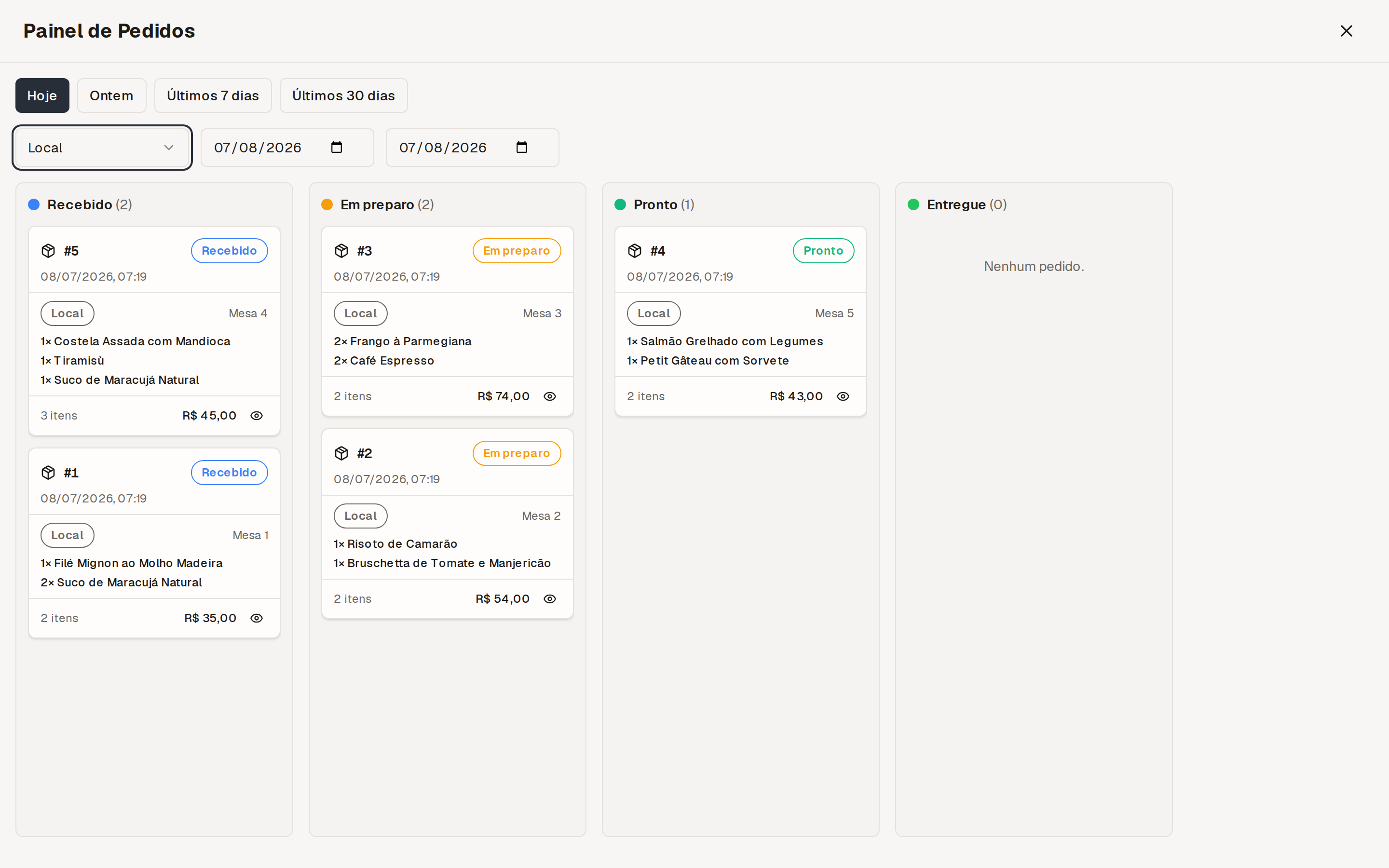
Want to see the customer's side? Browse the menu of the demo store and make a test reservation on the demo reservations site.
One vendor, one public price
Here you have one contract, one support team, and one bill. Pricing is published on our website: see Plans and limits and up-to-date pricing at easydine.app/#planos. On sales, there is a single fee: 10% on orders paid online (delivery), with card processing already included. Dine-in orders and reservations carry no fee.
Runs in the browser, no required hardware
easydine runs in the browser, on the computer or phone you already have. We don't require a tablet or a kiosk. The thermal printer for the kitchen is optional: if you want printed tickets, kitchen printing works with common 80 mm thermal printers.
Check out order management, QR code ordering at the table, and delivery.